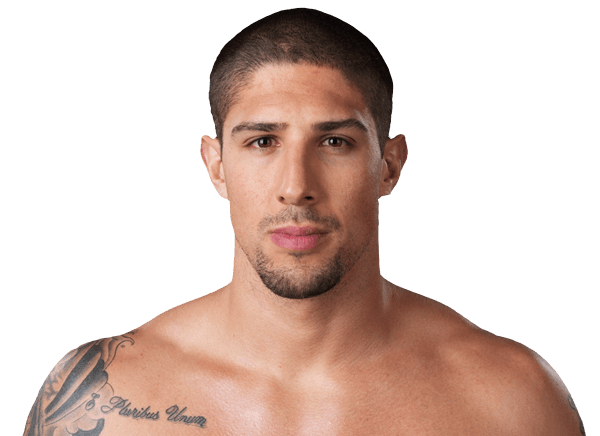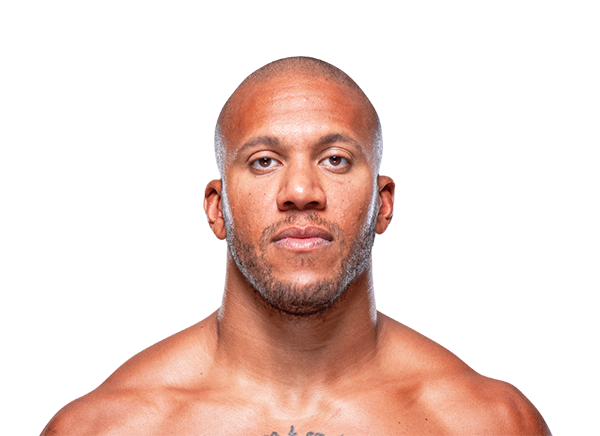

John Howard
def. Dennis Hallman
Punches to Head At Distance
Who owned each round
↳Bottom lineOn the numbers: Howard 1 round, Hallman 2. This is a stats score, not the judges' cards.
?How to read this chart
- One bar = one round
- scored from the official numbers: significant strikes (the strikes that count), knockdowns (worth six strikes), takedowns (worth two), submission attempts and control time.
- Up or down
- a bar above the line is a round Howard (red) won on the numbers, below the line a round for Hallman (blue). Taller = more one-sided. The pair of numbers is significant strikes landed, red–blue; ✕ KD marks a knockdown.
- The gold line
- is the running total: where it ends, above or below the middle, shows who was ahead on the numbers overall.
It ended in round 3. Howard landed 12 significant strikes to Hallman's 1, scored 1 knockdown, 2 takedowns and 3:16 of control in that round.
↳Bottom lineJohn Howard out-landed Dennis Hallman 14 to 8 on significant strikes and Hallman had more control time (9:10).
?How to read this chart
- Each line
- is one stat for the whole fight: the red corner's number on the left, the blue corner's on the right, and the bar split by their share of the two.
- Small print
- under strikes and takedowns is landed of attempted. Significant strikes are the power shots and anything thrown at distance, not light taps; control time is how long one fighter held the other down or against the fence.
Fight totals
Where the strikes landed
Where the strikes landed
↳Bottom lineHoward aimed 50% of landed strikes at the head, Hallman 25%.
?How to read this chart
- One figure per fighter
- showing every significant strike they landed (power shots and anything thrown at distance, not light taps). The brighter a zone, the bigger its share of the total.
- The labels
- give the share and landed/thrown for head, body and legs: 12/30 means 12 landed out of 30 thrown.
- The three bars
- split the same strikes by position: at distance, in the clinch (tied up standing) or on the ground.
Every roundRound stats
| Round | Fighter | Sig. str. | Total | KD | TD | Sub att. | Control | Head | Body | Legs |
|---|---|---|---|---|---|---|---|---|---|---|
| R1 | John Howard | 2/2 | 9/9 | 0 | 0/0 | 0 | 0:09 | 0 | 1 | 1 |
| Dennis Hallman | 3/8 | 24/29 | 0 | 2/3 | 1 | 3:47 | 2 | 1 | 0 | |
| R2 | John Howard | 0/1 | 4/6 | 0 | 0/1 | 0 | 0:07 | 0 | 0 | 0 |
| Dennis Hallman | 4/9 | 16/27 | 0 | 0/0 | 1 | 4:21 | 0 | 4 | 0 | |
| R3 | John Howard | 12/19 | 56/72 | 1 | 2/2 | 0 | 3:16 | 7 | 3 | 2 |
| Dennis Hallman | 1/7 | 7/14 | 0 | 0/1 | 0 | 1:02 | 0 | 1 | 0 |
How they arrivedThe last five, and who they beat
 Tamdan McCroryUFC 101 · Aug 2009SPLIT1479WCWChris WilsonUFC 94 · Jan 2009SPLIT1461
 Matt HughesUFC 29 · Dec 2000SUBR11509
↳Bottom lineHallman has faced the tougher opposition lately: average opponent 1476 against 1470.
?How to read this chart
- Each row
- is one recent UFC fight, newest first: W win, L loss, D draw, NC no contest; then the opponent, how it ended (KO/TKO, SUB = submission, DEC = decision) and the round.
- The number on the right
- is the opponent's Cage Nightly rating going into that fight. 1500 is an average UFC fighter, 1560+ is near the top: the higher it is, the harder the win.
- The bottom line
- sums it up: average opponent rating, wins over 1560+ opponents, and how many wins came by finish.
Who they were coming inHoward vs. Hallman
Career rates use UFC fights only, including this one. Data: UFC Stats.
Referee: Josh Rosenthal
After this fightWhat came next
Ready-made cards, built from our numbers
A story for Instagram and TikTok, a square for X, Threads and WhatsApp. They update with the result.