Fight Intelligence · free
Any two fighters, side by side
Win probability from the Cage Nightly Fight Model, how the fight ends (KO, submission or decision, round by round), career paths by age, skills ranked inside each weight class, numbers adjusted for the quality of the opposition and what to expect if they met tonight.
Data through · updated
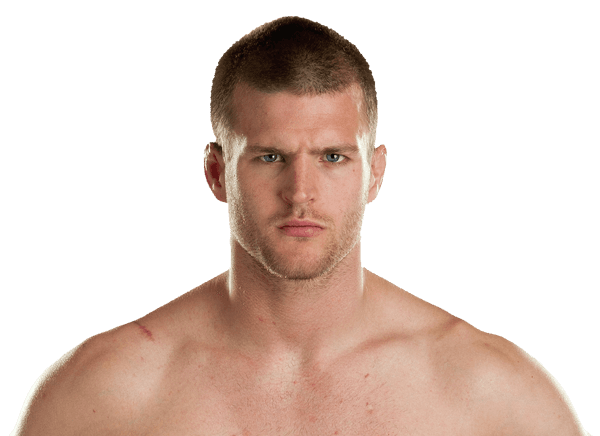
Different weight classes. Evan Tanner competes at Middleweight, Pascal Krauss at Welterweight. The model knows nothing about size, so treat the probability as a curiosity, and each fighter's percentiles are against their own division.
The simulator · who wins times howHow it ends
How the models work →How much to trust it. When the Fight Model has made a favourite 75–80%, that favourite won 74% of 546 UFC fights it had never seen. Here it is Pascal Krauss at 76%. The method model beats the weight-class averages by 5% on log loss and picked the right method 53% of the time, against 50% for the averages, out of sample since 2011.
↳Bottom lineKrauss wins 76% of the time; the fight more often than not ends early (43% distance). Tanner finishes 15%, Krauss 42%.
?How to read this chart
- The six outcomes
- add up to 100%: who wins (the Fight Model, neutral corner) times how (KO/TKO, submission or decision), from how each fighter has won and lost before and the finish rate of the weight class over the last three years.
- The rounds
- spread each finish over the rounds the way UFC finishes have fallen since 2010 (three-round fights); the last column is the chance the judges decide it.
- Not a crystal ball:
- the models do not know about injuries, camp changes, weight cuts or anything before the UFC. Draws and no contests are left out. These two compete in different weight classes, so the finish rates are the average of both divisions and size is not in the model: read it as a curiosity.
Computed from the numbers belowWhat decides it
- 01
Pascal Krauss is the model's pick at 76%, with neither corner assigned.
- 02
Tanner is trending down on the feet: −1.9 strikes a minute (landed minus absorbed) over the last five, against +0.7 across the career.
- 03
Tanner should find takedowns: about 2.7 per 15 minutes against Krauss's record of defending them, where the UFC average is 1.4.
- 04
Tanner is 16 years older (55). Compared with their own career, fighters tend to slip below their level from the early thirties; Krauss is 39.
Inside the probabilityWhat moves the number
↳Bottom lineThe biggest single push is age, towards Krauss. 4 ingredients lean to Tanner and 5 to Krauss; on balance Krauss has the stronger case.
?How to read this chart
- Each bar
- is one ingredient of the Fight Model and how far it pushes the probability, on the log-odds scale. Left = it helps Tanner, right = it helps Krauss.
- Neutral corner:
- the UFC usually puts the favourite in red, and the model knows it. Here the number is the average of the two possible corner assignments, so the corner favours no one.
- Ingredients overlap,
- so a bar is the push on top of everything else, not a full story on its own. How each one is measured is on the method page.
Percentiles inside each weight classSkill profile
Evan Tanner has fewer than three UFC fights in the last three years, so there are no percentiles against the current division. The opponent-adjusted numbers below still apply.
Opponent-adjusted, against the UFC averageIf they met tonight
↳Bottom lineKrauss should out-land Tanner on the feet, 5.1 to 4.5 a minute; on the mat Tanner has the edge, 2.7 takedowns per 15 minutes to 0.2.
?How to read this chart
- The expected numbers
- start from the UFC average of the last five years (4.0 significant strikes a minute, 1.4 takedowns per 15 minutes), add how much more the attacker usually lands than their opponents concede, and how much more the defender usually concedes than their opponents land.
- A simple additive estimate,
- not a simulation: it does not know who will be on top, or for how long. It tells you which way each phase of the fight leans.
| Above or below what opponents usually allow | Tanner | Krauss |
|---|---|---|
| Strikes landed / min | +0.1 | +1.9 |
| Strikes absorbed / min | −0.8 | +0.4 |
| Takedowns landed / 15 min | +0.8 | −0.7 |
| Takedowns conceded / 15 min | −0.6 | +0.5 |
| Control time, share of the fight | +15 pts | +2 pts |
Rating by age, not by yearCareer paths
↳Bottom lineAt 26, Tanner was rated 1450 and Krauss 1440: dead level. Tanner has the higher peak (1602).
?How to read this chart
- Each line
- is a fighter's Cage Nightly rating after every UFC bout, drawn against their age on fight night instead of the calendar, so two careers from different eras line up.
- The glowing dot
- is each career peak; the dashed line is age 26, the furthest point both careers have reached. 1500 is the long-run UFC average.
Last five UFC fights against the whole careerForm
↳Bottom lineStriking margin over the last five against the career, strikes a minute: Tanner −2.6.
?How to read this chart
- Career
- is every UFC fight with official statistics; Last 5 is the five most recent. The arrow appears when the last five differ from the career by 15% or more (and by a meaningful amount, not 0.1 against 0.0), pointing up when that is good news for the fighter.
- Avg opponent rating
- is the Cage Nightly rating of the opponents on the night: a fighter whose numbers rise while the opposition gets tougher is improving for real.
| Career (17) | Last 5 | ||
|---|---|---|---|
| Sig. strikes landed / min | 3.2 | 1.8 | ▼ |
| Sig. strikes absorbed / min | 2.5 | 3.7 | ▼ |
| Takedowns / 15 min | 2.6 | 2.5 | • |
| Takedowns conceded / 15 min | 0.9 | 0.0 | ▲ |
| Control time | 42% | 37% | • |
| Win rate | 65% | 20% | ▼ |
| Avg opponent rating | 1485 | 1510 | • |
| Career (4) | Last 5 | ||
|---|---|---|---|
| Sig. strikes landed / min | 5.5 | 5.5 | • |
| Sig. strikes absorbed / min | 3.9 | 3.9 | • |
| Takedowns / 15 min | 1.5 | 1.5 | • |
| Takedowns conceded / 15 min | 2.5 | 2.5 | • |
| Control time | 28% | 28% | • |
| Win rate | 50% | 50% | • |
| Avg opponent rating | 1469 | 1469 | • |